2026 Top iPSC Cell Types for Global Buyers

In 2026, global buyers need more than a broad catalog of ipsc cells. They need clear evidence, consistent manufacturing, and practical performance data. This guide examines the cell types gaining attention across research, drug development, and disease modeling. It focuses on real purchasing questions, not promotional rankings.

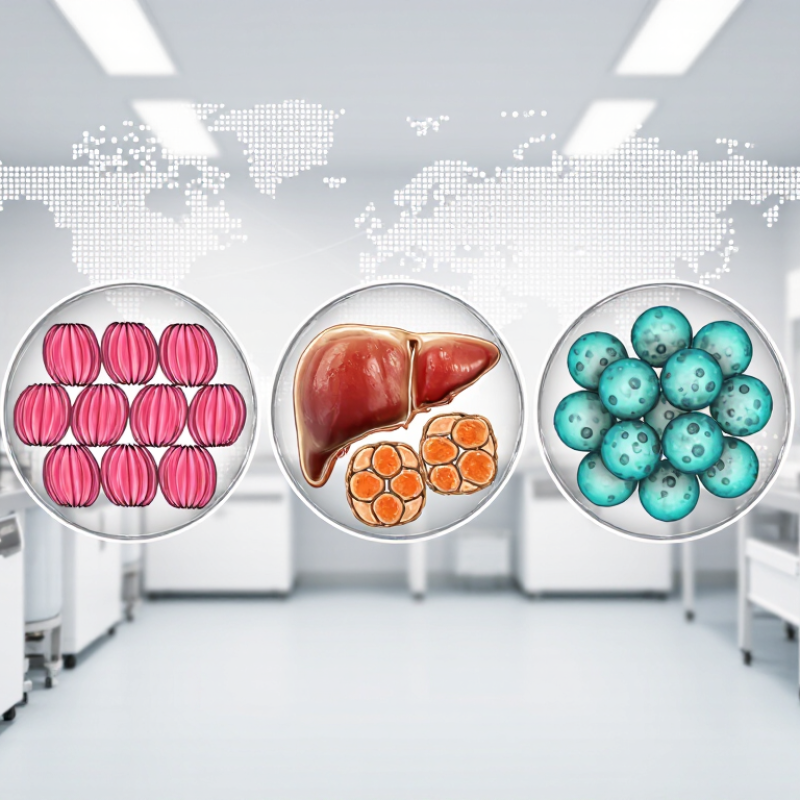
Neural progenitor cells support studies of neurodegeneration, brain injury, and compound toxicity. Cardiomyocytes help teams assess cardiac safety using human-relevant models. Hepatocytes remain important for metabolism, liver toxicity, and transporter research. Pancreatic beta cells support diabetes investigations and functional disease models. Organoid-ready cells add value when buyers need tissue-like complexity. Each option has different maturation limits.

Details matter.

A reliable supplier should document donor reprogramming, genomic stability, mycoplasma testing, differentiation protocols, and release criteria. Buyers should also review passage history, viability after thawing, marker expression, and functional assays. Certificates alone may not answer every scientific concern. Some products perform well in one laboratory but disappoint under another workflow. That limitation deserves honest attention.

Global purchasing adds further complexity. Import rules, biosafety requirements, shipping temperatures, customs documents, and local ethics standards can affect delivery. Buyers should confirm whether the supplier supports validated cold-chain logistics and technical troubleshooting. Cost per vial can be misleading. A cheaper product may require longer optimization and produce weaker assay consistency. This overview compares leading iPSC cell categories through evidence, usability, scalability, and regulatory awareness. It also recognizes uncertainty, because “best” depends on the model, endpoint, and laboratory expertise.

2026 Top iPSC Cell Types for Global Buyers

What Are iPSC Cell Types and Why Do They Matter in 2026?

2026 Top iPSC Cell Types for Global Buyers

What Are iPSC Cell Types and Why Do They Matter in 2026?

Induced pluripotent stem cells, or iPSCs, are mature human cells reprogrammed into a flexible, stem-like state. Researchers can guide them into neurons, cardiomyocytes, hepatocytes, pancreatic beta cells, immune cells, and other specialized models. These are usually called iPSC-derived cell types. Each type imitates selected human biology, but none perfectly reproduces an entire organ.

Cell choice directly affects experimental relevance, reproducibility, and purchasing cost. Neurons support studies of neurodegeneration and brain development. Cardiomyocytes can reveal changes in rhythm, contraction, and cellular stress. Hepatocytes help assess metabolism and liver toxicity. Immune-cell models are useful for inflammation and immunology research. More advanced organoid systems may provide richer tissue interactions, although they often show greater batch variation.

Not every cell behaves alike. Quality changes outcomes. Global buyers should review cell identity, purity, viability, differentiation efficiency, genomic stability, donor information, and release-testing methods. Shipping conditions also matter, especially for temperature-sensitive products crossing multiple borders. In practice, a lower price may become expensive if cells require extensive recovery or produce inconsistent data. The field is not perfectly standardized, either. Different laboratories may use similar labels for cells with different maturity levels. That limitation deserves attention. Clear certificates, transparent protocols, and independent validation can make purchasing decisions more reliable in 2026.

How Are Major iPSC Cell Types Classified and Produced?

2026 Top iPSC Cell Types for Global Buyers

How Are Major iPSC Cell Types Classified and Produced?

Major iPSC cell types are classified by origin, potency, differentiation stage, and intended use. Origin may include reprogrammed adult cells, embryonic cells, or disease-specific donor cells. Product catalogs usually separate undifferentiated iPSCs, committed progenitors, and mature cell types. Common examples include cardiomyocytes, neurons, hepatocytes, retinal cells, and pancreatic cells.

The 2024 Grand View Research market analysis valued the global stem cell market at approximately USD 17.9 billion in 2023. This figure covers several stem-cell categories, not iPSCs alone, so buyers should avoid treating it as a precise iPSC market value.

Production begins with donor screening, tissue collection, reprogramming, and clone selection. Laboratories then confirm morphology, pluripotency markers, chromosome stability, identity, sterility, and mycoplasma status. Directed differentiation uses timed growth factors, media changes, and controlled cell density.

For example, cardiac production may require staged mesoderm induction before beating cells appear. The International Society for Stem Cell Research recommends stronger characterization and transparency across research and clinical applications. Yet, a high pluripotency score does not guarantee consistent differentiation. That remains a practical weakness.

Global buyers should request passage history, batch records, release criteria, and functional assay results. Labels can sound precise, while biological performance still varies between clones.

Which iPSC-Derived Cell Types Lead Global Buyer Demand?

In 2026, global buyers are showing the strongest demand for iPSC-derived cardiomyocytes, neurons, hepatocytes, and pancreatic beta cells. Cardiomyocytes remain central to cardiac safety testing, where researchers measure beating patterns, calcium movement, and drug responses. Neurons attract buyers developing models for neurodegenerative diseases and neural toxicity studies. These cells must perform consistently across repeated experiments.

Consistency matters more than a promising datasheet. Buyers often inspect viability after thawing, purity markers, maturation levels, and batch-to-batch variation. They also request clear donor information, passage history, differentiation protocols, and sterility documentation. In my experience, a vial that survives shipping but loses functional activity can create costly delays. Small handling details matter.

Hepatocytes continue to support metabolism and toxicity research, especially when laboratories need human-relevant liver responses. Pancreatic beta cells are gaining attention in diabetes studies, although their functional maturity can differ between lots.

iPSC-derived immune cells are also entering more procurement discussions, including macrophage and natural killer cell models. Demand is growing, but forecasts are not flawless. Some buyers choose lower-cost cells first, then change suppliers after weak assay performance. Cell type alone does not guarantee value. Functional validation, transparent quality control, and practical technical support increasingly shape purchasing decisions.

What Quality, Safety, and Compatibility Factors Should Buyers Compare?

2026 Top iPSC Cell Types for Global Buyers

For global buyers, iPSC cell type selection begins with evidence, not product labels. An international regenerative-medicine report published in 2024 recorded more than 7,000 cell and gene therapy clinical trials worldwide. That scale increases the need for comparable quality records. Buyers should request donor history, reprogramming methods, passage numbers, karyotype results, pluripotency markers, and genomic stability data. A beautiful certificate is not enough.

Safety testing must match the intended cell type. iPSC-derived cardiomyocytes need reliable electrical activity and contraction data. Neural cells require identity markers, maturity testing, and residual undifferentiated-cell controls. Immune-cell products should show activation, cytokine, and off-target response profiles.

ISSCR standards emphasize traceability, informed consent, contamination control, and scientifically justified release criteria. Sterility, mycoplasma, endotoxin, and adventitious-agent testing remain essential.

Compatibility is often overlooked. Confirm species compatibility, culture-medium requirements, cryopreservation conditions, thaw recovery, and assay performance after shipment. The 2024 global cell-therapy manufacturing outlook reported that manufacturing complexity remains a major adoption barrier, especially across regions with uneven infrastructure. Buyers should compare post-thaw viability at 24 and 72 hours, not only the vial label. Small differences matter. Some suppliers provide limited functional data. That weakness deserves scrutiny, including in this article’s assumptions. A practical comparison table should record batch variability, transport temperature, acceptance limits, and failure-handling procedures before purchase.

How Can Global Buyers Select the Right iPSC Cell Type?

Selecting the right iPSC cell type begins with the intended study, not the supplier catalogue. Define the target tissue, assay format, disease model, and expected maturity. Cardiomyocyte-like cells suit electrical and contractility studies. Neural cells require different markers, culture media, and functional tests. A convenient cell type may still be scientifically unsuitable.

Global buyers should review donor information, reprogramming methods, passage history, genome stability, and contamination testing. Ask for recent certificates, identity data, differentiation efficiency, and lot-specific quality results. Documentation matters across borders. Import rules, cold-chain capacity, customs timing, and local biosafety requirements can affect the project as much as cell performance. Small paperwork gaps can cause expensive delays.

Do not judge quality from one impressive image. Request pilot data using your own assay conditions. Cell behavior can change with matrix choice, operator skill, and thawing speed. No selection is perfect. A cell line with high yield may show weaker physiological responses. Another may be harder to expand but better match the research question. Record acceptance criteria before ordering, including viability, marker expression, functional activity, and acceptable batch variation. Recheck these criteria after delivery. Some decisions look efficient on paper, yet fail at the bench. That failure should improve the next selection, not disappear from the project record.

2026 Top iPSC Cell Types for Global Buyers - How Can Global Buyers Select the Right iPSC Cell Type?

A practical selection guide based on biological relevance, application maturity, characterization requirements, scalability, and logistics suitability.

No. iPSC-Derived Cell Type Primary Research and Development Uses Key Biological Functions Typical Maturity Considerations Main Advantages for Global Buyers Important Limitations and Risks Recommended Quality Attributes Best Fit for Buyer Priorities Application Maturity
1 iPSC-Derived Cardiomyocytes Cardiotoxicity Disease modeling Contractility studies Drug discovery Spontaneous contraction, electrical excitation, calcium handling, and cardiac-specific gene expression. Many preparations resemble fetal or immature cardiomyocytes unless further matured through electrical, mechanical, metabolic, or three-dimensional conditioning. Well-established assay formats; compatible with electrophysiology, calcium imaging, contractility, and multiwell screening workflows. Immature phenotype, line-to-line variability, mixed cell populations, and sensitivity to culture conditions can affect assay reproducibility. Purity; contraction rate; action-potential or field-potential characteristics; calcium-transient profile; cardiac marker expression; mycoplasma and sterility testing. Buyers seeking scalable, assay-ready cells for cardiac safety, efficacy, and disease-modeling programs. High
2 iPSC-Derived Neurons Neurotoxicity Neurodegeneration Synaptic biology CNS drug discovery Neuronal excitability, synaptic signaling, axonal transport, and subtype-specific neurotransmitter activity. Neuronal maturity varies substantially by subtype and culture duration; extended culture and co-culture may improve synaptic function. Supports human-relevant models that are difficult to obtain from primary tissue; can be generated as excitatory, inhibitory, sensory, dopaminergic, or motor neuron populations. Subtype definition may be incomplete; electrophysiological activity can be heterogeneous; long culture periods may increase cost and operational complexity. Neuronal subtype markers; viability; neurite morphology; spontaneous or evoked activity; synaptic protein expression; functional response to reference compounds. Buyers prioritizing human CNS relevance and disease-specific neuronal phenotypes over rapid turnaround. High
3 iPSC-Derived Hepatocyte-Like Cells Drug metabolism Hepatotoxicity Liver disease modeling Transporter studies Albumin secretion, hepatic transporter activity, xenobiotic metabolism, glycogen storage, and liver-associated protein production. Many products retain an immature phenotype compared with adult primary hepatocytes; maturation protocols and three-dimensional culture can improve function. Renewable human source; useful for mechanistic studies and patient-specific disease models; can be integrated into two-dimensional or organoid systems. Metabolic enzyme activity may be lower or differently regulated than in adult liver cells; donor genotype and differentiation batch can influence results. Albumin and urea production; cytochrome enzyme activity; transporter function; lipid accumulation; viability; hepatic marker expression; genetic stability. Buyers needing renewable human hepatic material for early-stage screening and disease modeling. High
4 iPSC-Derived Endothelial Cells Vascular biology Angiogenesis Barrier models Drug delivery Vascular barrier formation, angiogenic response, cell adhesion, nitric oxide signaling, and interaction with blood or immune components. Phenotype can vary according to arterial, venous, microvascular, or organ-specific specification; prolonged culture may alter endothelial identity. Useful for human vascular models, microfluidic systems, permeability testing, and tissue-engineering applications. Endothelial identity may drift in culture; passage number, substrate, shear stress, and growth factors strongly influence performance. CD31, VE-cadherin, and von Willebrand factor expression; barrier integrity; tube formation; permeability; response to inflammatory or angiogenic stimuli. Buyers developing vascularized tissues, blood-brain barrier models, or organ-on-chip platforms. High
5 iPSC-Derived Pancreatic Beta-Like Cells Diabetes modeling Glucose response Cell therapy research Islet biology Insulin production, glucose-stimulated insulin secretion, glucose sensing, and endocrine-cell signaling. Functional maturity and glucose responsiveness remain key development challenges; three-dimensional aggregation may support more physiologic behavior. Provides a renewable human model for studying beta-cell development, diabetes mechanisms, and cell-replacement strategies. Incomplete maturation, variable insulin secretion, mixed endocrine populations, and potential residual undifferentiated cells require careful control. Insulin and C-peptide content; glucose-stimulated insulin secretion; beta-cell markers; cell composition; residual pluripotent-cell assessment; sterility. Buyers willing to prioritize functional characterization and developmental relevance over the shortest production timeline. Medium to High
6 iPSC-Derived Retinal Pigment Epithelial Cells Retinal disease Ophthalmology Barrier assays Cell replacement research Phagocytosis of photoreceptor outer segments, visual-cycle support, polarized barrier function, and secretion of retinal trophic factors. Cells typically require extended culture to develop pigmentation, polarity, tight junctions, and mature functional characteristics. Strong relevance for retinal degeneration models and translational ophthalmology; can be evaluated using imaging and barrier assays. Long maturation timelines; pigmentation alone does not confirm full function; batch variability and residual undifferentiated cells must be monitored. RPE identity markers; pigmentation; transepithelial resistance; polarized protein localization; phagocytosis; visual-cycle activity; sterility. Buyers with ophthalmology programs that can support longer qualification and specialized functional testing. High
7 iPSC-Derived Skeletal Muscle Cells Muscle disease Neuromuscular research Contractility Regenerative medicine Myogenic differentiation, sarcomere organization, contraction, and interaction with motor neurons or connective-tissue cells. Myoblasts and myotubes may require prolonged culture, electrical stimulation, mechanical loading, or three-dimensional organization for improved maturity. Useful for studying inherited muscle disorders and evaluating compounds that affect muscle formation or contraction. Variable fusion efficiency, incomplete sarcomere maturation, and dependence on culture architecture can reduce comparability between laboratories. Myogenic marker expression; fusion index; sarcomere organization; contractile force; calcium handling; viability; genetic stability. Buyers developing neuromuscular models or tissue-engineering systems with advanced functional-readout capacity. Medium
8 iPSC-Derived Immune Cells Immunology Cancer research Inflammation Cell therapy research Antigen recognition, cytokine secretion, cytotoxicity, phagocytosis, and innate or adaptive immune responses, depending on lineage. Immune-cell maturity and functionality depend strongly on the selected lineage, differentiation method, activation state, and co-culture environment. Offers a potentially renewable and genetically engineerable source for standardized immune-cell studies. Functional responses may differ from those of adult primary immune cells; activation history, receptor expression, and donor-independent variability require careful assessment. Lineage markers; receptor profile; cytotoxicity or phagocytosis; cytokine release; activation response; viability; residual pluripotent-cell testing. Buyers seeking renewable, standardized immune-cell inputs for screening or engineered-cell research. Medium to High
9 iPSC-Derived Kidney Cells Nephrotoxicity Renal disease Transport studies Kidney organoids Selected renal transport, filtration-related signaling, tubular function, and nephron-patterning processes. Kidney organoids and differentiated renal cells often resemble developing rather than fully mature adult kidney tissue. Enables human renal development and disease modeling, including genetically defined conditions that are difficult to reproduce in conventional cell lines. Cellular composition can be heterogeneous; nephron segmentation and adult-like function may be incomplete; organoid size and structure can vary. Segment-specific markers; transporter activity; tubular morphology; barrier or permeability measurements; viability; batch uniformity. Buyers focused on renal toxicity and developmental disease models who can accommodate organoid-based variability. Medium
10 iPSC-Derived Lung and Airway Cells Respiratory disease Infection models Pulmonary toxicity Airway biology Airway epithelial barrier formation, mucus production, ciliary activity, gas-exchange-related functions, and pulmonary cell signaling. Airway and alveolar cells may require air-liquid interface culture, three-dimensional organization, or extended differentiation for mature phenotypes. Provides human respiratory models for infection, toxicology, fibrosis, and genetic lung disease research. Cell composition and maturity can vary; culture format strongly affects ciliation, mucus production, barrier function, and susceptibility to stimuli. Cell-type markers; cilia beat frequency; mucus production; transepithelial resistance; barrier integrity; pathogen-response or inflammatory readouts. Buyers with respiratory programs and the infrastructure to maintain specialized culture formats. Medium to High
11 iPSC-Derived Intestinal and Colonic Cells Gut barrier studies Microbiome research Inflammatory disease Absorption studies Barrier formation, epithelial transport, mucus production, nutrient absorption, and interaction with microbial or immune signals. Intestinal organoids and epithelial cultures often display fetal or regionally mixed characteristics unless further patterned and matured. Useful for human gut disease models, epithelial permeability testing, and host-microbe interaction studies. Regional identity, cell-type composition, culture geometry, and microbiome compatibility may vary between preparations. Barrier integrity; epithelial and regional markers; mucus production; transporter activity; permeability; response to inflammatory stimuli. Buyers requiring complex epithelial models and willing to qualify culture-specific performance. Medium to High
12 iPSC-Derived Fibroblasts and Mesenchymal Cells Fibrosis research Wound healing Extracellular matrix Tissue engineering Extracellular-matrix production, tissue remodeling, wound-response signaling, and support of parenchymal or vascular cells. Phenotype depends on tissue specification and activation state; culture-induced changes can occur during expansion. Relatively adaptable for co-culture, scaffold, and tissue-engineering workflows; supports patient-specific disease modeling. Fibroblast activation and senescence can alter matrix production; generic markers may not confirm tissue-specific identity. Lineage markers; extracellular-matrix composition; proliferation; senescence markers; contractility or migration; inflammatory response. Buyers prioritizing co-culture compatibility, matrix biology, or scalable support-cell production. Medium to High

Buyer selection checklist: Define the intended biological question first, then compare cell identity, maturity, functional assay performance, batch consistency, genetic stability, sterility, mycoplasma status, residual pluripotent-cell risk, culture format, shipping conditions, and documentation requirements.

Interpretation: “Application maturity” reflects the general level of methodological adoption and assay readiness, not a guarantee of clinical suitability. Maturity, purity, functionality, and reproducibility should be verified using lot-specific qualification data.

Search engine powered by ElasticSuite