
In recent years, the demand for Bamboo Wipes has significantly surged. Reports indicate that the global eco-friendly wipe market is projected to grow at a rate of 4.5% annually. Many consumers are now choosing bamboo over traditional materials due to its sustainability. Bamboo is known for its rapid growth and less environmental impact.
Choosing the right Bamboo Wipes can be overwhelming. With various brands and formulations available, understanding key features is essential. Consider the purpose of the wipes. Are you using them for sensitive skin, cleaning, or on-the-go convenience? Not all bamboo wipes are created equal. Some may lack moisture or have added chemicals.
It is crucial to explore product certifications too. Look for wipes that are biodegradable and sourced responsibly. Reviews and user experiences can also offer insights. However, be cautious; not every product will meet your expectations. As the bamboo wipes market evolves, staying informed on quality and brand trustworthiness is vital for making the best choice.
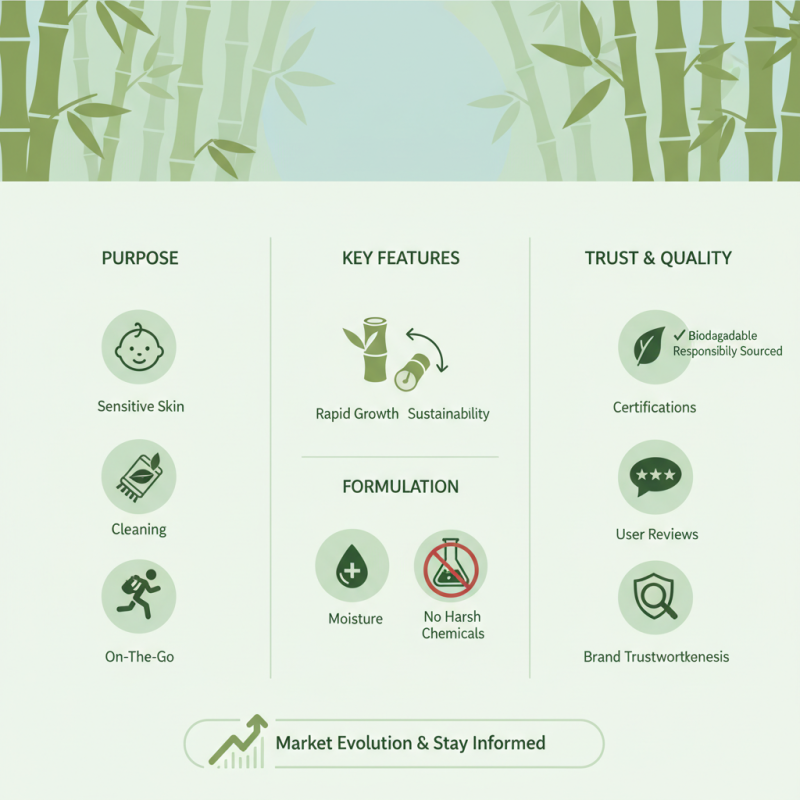
When selecting bamboo wipes, it’s crucial to understand the diverse types available. Bamboo wipes can differ in texture, size, and purpose. Some are designed for sensitive skin, while others are meant for general cleaning. A report from the Sustainable Cleaning Products Association indicates that 74% of consumers are concerned about the environmental impact of wipes, making bamboo alternatives increasingly popular.
Many bamboo wipes claim to be biodegradable, which is a significant factor for eco-conscious buyers. Additionally, bamboo fibers are known for their antibacterial properties. A study published in the Journal of Environmental Science found that bamboo can reduce bacteria by over 99% within 24 hours. However, not all bamboo wipes are equal. Some may include additives that negate their eco-friendliness.
It’s also important to consider the packaging. Bamboo wipes that come in eco-friendly packaging are often preferred. The purported sustainability of bamboo cannot be undermined if the entire product is not eco-conscious. As consumers, we must always verify the product details and understand any trade-offs involved. It’s not just about choosing bamboo; it’s about choosing wisely.
When selecting bamboo wipes, focus on key features that indicate quality. High absorbency is essential. Bamboo is naturally more absorbent than traditional materials. Look for wipes that can hold moisture effectively without falling apart. Research from Eco-Products indicates that bamboo fibers absorb up to 70% more liquid than conventional wipes.
Another important feature is biodegradability. Bamboo wipes should decompose quickly, reducing environmental impact. According to the World Wildlife Fund, bamboo-based products can break down within 60 days in compost conditions. This makes them a sustainable choice for eco-conscious consumers.
Tip: Check the packaging for certifications like "100% biodegradable" and "chemical-free" to ensure safety and sustainability.
Finally, consider texture. A soft, textured surface ensures comfort, especially for sensitive skin. User reviews often highlight that thicker wipes provide a better experience. Remember, not all bamboo wipes are created equal. Take time to compare options for the best choice.
Environmental concerns have pushed many to reconsider their choices. Bamboo wipes offer a sustainable alternative to conventional wipes. Made from a renewable resource, bamboo grows quickly and requires minimal water. Unlike traditional wipes, which often contain polyester and other plastics, bamboo wipes biodegrade more easily. This means they lessen the burden on landfills and reduce plastic pollution.
Using bamboo wipes also promotes healthier ecosystems. They are naturally antibacterial, reducing the need for harsh chemicals. This is beneficial for both human health and the environment. However, it’s important to remember that not all bamboo wipes are created equal. Some may still contain non-biodegradable components. Always check the ingredients before making a purchase.
While bamboo wipes are a positive step toward sustainability, consumers need to stay informed. Consider how your usage affects the environment. Is it truly necessary to use wipes daily? Reflecting on this can lead to more responsible choices. Bamboo wipes are not a complete solution but a step toward greener living.
The bamboo wipe industry has seen significant growth in recent years. According to market research, the demand for eco-friendly products has surged. In fact, the global bamboo wipes market is expected to exceed $1 billion by 2025. This trend reflects a shift in consumer preferences towards sustainable alternatives.
Sales data indicate that millennials and Gen Z consumers are driving this change. They prioritize products that are biodegradable and cruelty-free. A report revealed that 72% of consumers are more likely to purchase products that emphasize sustainability. This growing awareness influences purchasing decisions. Consumers increasingly seek transparency in ingredient sourcing and manufacturing processes.
Quality is also a key concern. Many buyers report dissatisfaction with wipes that tear easily or lack moisture. A survey indicated that 67%% of consumers rated durability as a top priority. This points to the need for brands to balance sustainability with product performance. As the industry evolves, companies must adapt to meet customer expectations effectively.
When selecting bamboo wipes, safety standards and certifications play a crucial role. Look for wipes that have been verified by reputable organizations. Certifications such as FSC (Forest Stewardship Council) show that the bamboo was sourced sustainably. This ensures that environmental impacts are minimal.
It's vital to check for free-from labels. Wipes should be free of harmful chemicals, fragrances, and dyes. Products labeled as hypoallergenic or dermatalogically tested may also enhance comfort and safety. However, avoid relying solely on marketing claims. Researching the brand's transparency and production processes allows consumers to make informed choices.
Quality control is another aspect to consider. Some brands may not adhere to strict safety protocols. A lack of certifications can indicate potential risks. Always seek out products that provide clear testing results or third-party evaluations. This ensures that the bamboo wipes meet the necessary safety and quality standards for you and your family.