
How to Choose TRIzol Reagent in 2026?
Choosing a Trizol reagent in 2026 is less about picking a familiar label and more about matching the reagent to your sample, workflow, and downstream assay. The name Trizol is often used broadly, but formulations, pack sizes, and supplier documentation can differ. A careful choice starts with the intended material: cultured cells, tissue, or another validated sample type. Small details matter.
Check the current product instructions, safety data sheet, storage requirements, and lot-specific documentation before ordering. Confirm whether the protocol supports your sample amount and whether extracted RNA will be used for reverse transcription, PCR, sequencing, or another application. These checks can help prevent a mismatch that appears only after lysis, phase separation, or cleanup. They do not guarantee a successful result. Sample handling and operator technique still matter.
Compare total cost per usable sample, not just bottle price. Consider packaging that suits expected throughput and avoids unnecessary repeated opening, while limiting excess stock that could expire or be stored incorrectly. For unfamiliar samples, review published or manufacturer-validated workflows and run a small pilot with suitable controls. Handle phenol- and guanidinium-containing reagents according to product instructions and established laboratory safety procedures. One point deserves a second look: convenience is not evidence of compatibility. This guide covers practical selection criteria, common trade-offs, and checks to make before purchase. Some uncertainty remains, because no reagent choice can replace testing in your own workflow.
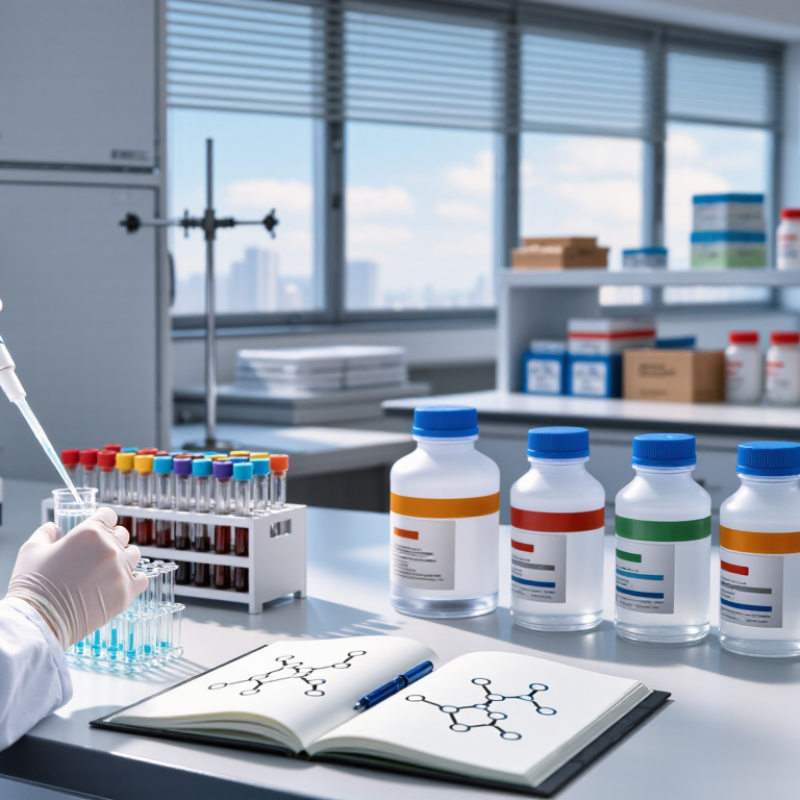
What TRIzol Reagent Is and How It Separates RNA
How to Choose TRIzol Reagent in 2026?
What TRIzol Reagent Is and How It Separates RNA
TRIzol is an acidic, phenol-based reagent used to break open cells and preserve RNA during extraction. Its chaotropic salts disrupt proteins and help separate nucleic acids from cellular material. After the sample is homogenized, chloroform is added and the mixture is centrifuged. This produces distinct layers: most RNA enters the upper aqueous phase, DNA collects near the interface, and many proteins and lipids move into the lower organic phase. The boundary is not always neat.
That small interface matters. Aspirating too close can carry DNA or phenol into the RNA fraction and affect later measurements. Transfer only the clear upper layer, using a fresh pipette tip and leaving a visible margin. RNA can then be precipitated, commonly with isopropanol, washed with ethanol, and dissolved in RNase-free water. Work promptly and follow current safety instructions; phenol and chloroform require suitable protective equipment and chemical-waste handling. Check RNA purity and integrity rather than trusting appearance alone. Absorbance ratios can flag contamination, but they do not show the whole picture. A gel or electropherogram can reveal degradation. Even with careful technique, yield varies with tissue, sample size, and homogenization. That variability is easy to underestimate.
How to Choose TRIzol Reagent in 2026? — What TRIzol Reagent Is and How It Separates RNA
| Workflow Dimension | What Happens | Typical Result or Measurement | Practical Selection or Handling Guidance |
|---|---|---|---|
| What the reagent is | A monophasic solution containing phenol and guanidinium thiocyanate. It disrupts cells and helps denature proteins, including RNases that can degrade RNA. | Cellular material is lysed and nucleic acids and proteins are released into the homogenate. | Choose a formulation intended for the sample type and downstream application; check its instructions for compatible input amounts and handling requirements. |
| Sample compatibility | Commonly used for cultured cells, animal tissues, and other biological samples that can be thoroughly homogenized. | Successful extraction depends on complete disruption and a sample-to-reagent amount within the protocol’s stated range. | For fibrous, fatty, or high-polysaccharide samples, consider whether the protocol includes suitable homogenization and cleanup steps. Avoid overloading the reagent. |
| Initial homogenization | The sample is disrupted in the reagent to produce a uniform lysate and expose cellular components to the denaturing solution. | A homogeneous lysate reduces the risk of incomplete extraction and uneven phase separation. | Use clean, RNase-controlled equipment and follow the protocol’s recommended disruption method. Keep samples cold when specified by the protocol. |
| Phase-separation trigger | Chloroform is added to the homogenate, mixed, and then centrifuged. This creates distinct liquid phases. | Many standard protocols use approximately 0.2 mL chloroform per 1 mL of reagent, but the required ratio is protocol-dependent. | Use the exact reagent-to-chloroform ratio, mixing method, incubation time, temperature, and centrifugation conditions specified for the selected procedure. |
| Upper aqueous phase | Under acidic phenol–guanidinium conditions, most RNA partitions into the upper aqueous phase. | This phase is the fraction normally collected for total RNA purification. | Transfer only the aqueous layer. Avoid disturbing the interface, because carryover can introduce DNA, proteins, or organic-phase contaminants. |
| Interphase | The interface between the aqueous and organic phases contains most of the precipitated genomic DNA. | DNA may be recovered from this fraction using an appropriate protocol. | Do not aspirate the interphase when the goal is clean RNA. DNA-sensitive downstream assays may require additional DNase treatment, as appropriate. |
| Lower organic phase | The lower phase contains phenol and other organic components, with most proteins and lipids partitioning into it or the interphase. | This fraction is not the RNA-containing fraction in the standard total-RNA workflow. | Keep it separate from the aqueous layer. Handle and dispose of it as hazardous chemical waste according to local rules. |
| RNA precipitation and wash | RNA in the aqueous phase is commonly precipitated with isopropanol, collected by centrifugation, and washed with dilute ethanol. | A washed RNA pellet is obtained for resuspension; precipitation and wash volumes vary by protocol. | Follow the specified precipitation time and centrifugation conditions. Remove residual ethanol before dissolving the pellet, without overdrying it. |
| RNA quality checks | Purity and integrity are assessed after extraction using suitable spectrophotometric and/or electrophoretic methods. | Absorbance ratios can indicate contamination, while electrophoresis or an RNA integrity instrument evaluates degradation. | Interpret measurements together with the downstream assay requirements; absorbance ratios alone do not establish RNA integrity or suitability. |
| Safety and storage | Phenol and chloroform are hazardous chemicals; guanidinium-containing waste must not be mixed with bleach. | Safe handling requires appropriate chemical controls and separate waste streams. | Use a chemical fume hood, suitable personal protective equipment, and the current safety data sheet. Store the reagent as directed by its manufacturer. |
Important: Exact sample limits, reagent volumes, incubation times, temperatures, and centrifugation settings depend on the specific protocol. Follow the current product instructions and institutional safety procedures.