What Is a Polyclonal Antibody and What Types Are Available?

Polyclonal antibody research remains central to immunoassays, protein detection, and translational medicine. Unlike monoclonal products, a polyclonal antibody contains multiple antibody populations. Each population recognizes a different epitope on the same antigen. This broader binding profile can strengthen signal detection when samples are complex or partially degraded.

Industry forecasts reflect continued demand. MarketsandMarkets, in its Antibodies Market—Global Forecast to 2028, identifies research, diagnostics, and therapeutic development as major application areas. Grand View Research also reports sustained growth across the broader antibody market, supported by biotechnology investment and expanding life-science testing. These figures are useful indicators, not guarantees. Report methods, market definitions, and regional coverage differ.

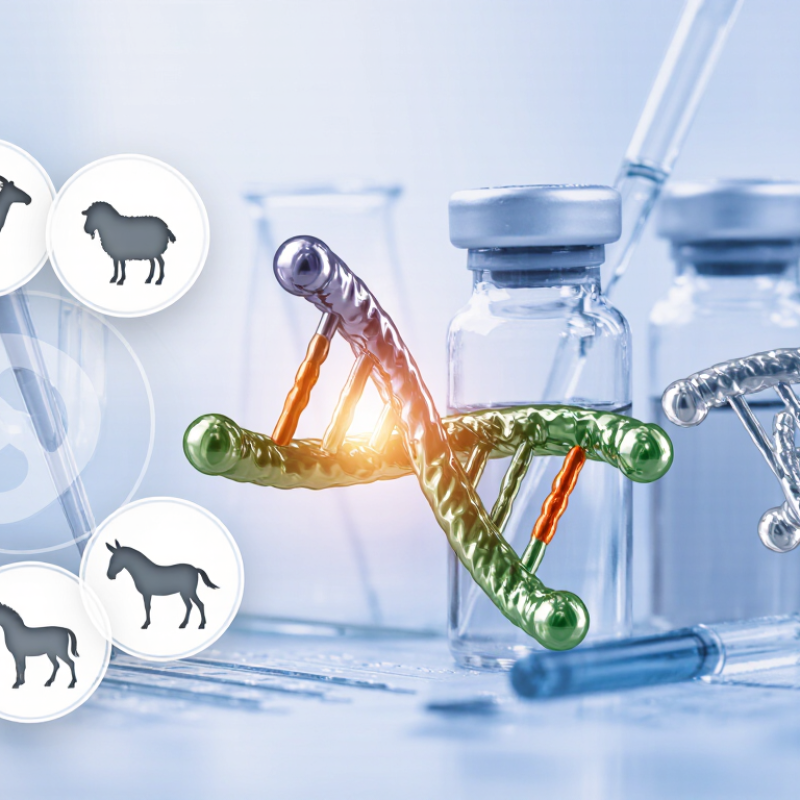
The available types require careful comparison. Researchers may select whole-serum polyclonal preparations, purified IgG, affinity-purified products, or antigen-specific fractions. Host species also matters. Common choices include rabbit, goat, sheep, donkey, and horse antibodies. Conjugated versions may carry enzymes, fluorophores, or biotin for direct detection. Pre-adsorbed products can reduce cross-reactivity between closely related species or proteins.

Yet, broader recognition has a trade-off. Batch-to-batch variation can affect reproducibility. Purification level, immunization design, storage temperature, and validation evidence all influence performance. The FDA’s Bioanalytical Method Validation guidance emphasizes selectivity, accuracy, precision, and stability during analytical evaluation. Those principles apply here, although research-use products are not automatically clinical-grade reagents. A strong purchasing decision therefore considers application data, lot information, independent validation, and the supplier’s technical documentation. This overview examines each factor, while acknowledging an uncomfortable point: no antibody works equally well in every assay.

What Is a Polyclonal Antibody and What Types Are Available?

Definition and Core Features of Polyclonal Antibodies

What Is a Polyclonal Antibody and What Types Are Available?

Definition and Core Features of Polyclonal Antibodies

A polyclonal antibody is a mixture of antibodies produced by different B-cell clones. Each antibody recognizes a separate epitope on the same antigen. This broad binding pattern helps detect proteins with small structural changes. It also makes polyclonal antibodies useful in Western blotting, immunohistochemistry, ELISA, and research assays.

They are commonly produced by immunizing an animal host with a selected antigen. The resulting serum contains antibodies with different affinities and specificities. Affinity-purified preparations remove many unrelated serum proteins. Antigen-specific purification can improve selectivity further. The 2024 Grand View Research antibody market report estimated the global antibody market at approximately USD 217 billion in 2023. That scale reflects continued demand for reliable detection tools across biomedical research and diagnostics.

Their main strength is signal intensity. Multiple antibodies can bind one target, creating stronger detection in samples with low protein abundance. However, this benefit has limits. Batch variation may affect assay consistency. Cross-reactivity can also produce confusing background staining. A clean-looking band can still mislead. Careful validation should include negative controls, dilution testing, and comparison with an independent method. In practice, polyclonal antibodies are powerful but not automatically specific. Their performance depends on antigen design, purification quality, storage conditions, and the biological sample itself.

How Polyclonal Antibodies Are Produced

What Is a Polyclonal Antibody and What Types Are Available?

How Polyclonal Antibodies Are Produced

Polyclonal antibodies are produced by immunizing an animal with a selected antigen. The immune system then creates many antibody populations against different antigen regions. Researchers usually collect blood after several booster injections. The serum contains antibodies, albumin, and other proteins. Purification removes much of this unwanted material.

The final product may be whole serum, purified immunoglobulin G, or an affinity-purified preparation. Affinity purification can enrich antibodies that bind the target antigen more selectively. However, the process is not perfectly uniform. Host species, antigen structure, adjuvant choice, and collection timing can change antibody strength. A 2023 review in Nature Methods emphasized that antibody validation remains a major reproducibility issue in biomedical research. That warning deserves attention.

European Commission statistics for 2020 recorded more than eight million animals used for scientific purposes across Europe. Only a portion supported biological-material production, but the figure highlights the importance of careful study design, refinement, and responsible use. Production should include approved welfare procedures, documented immunization schedules, and traceable sample handling.

Tips: Define the target application before immunization. Test several serum dilutions. Compare pre-immune and immune samples. Check cross-reactivity, lot variation, and storage stability. A strong signal alone is not proof of specificity. Negative controls matter. So does repeated testing.

Major Types of Polyclonal Antibodies

What Is a Polyclonal Antibody and What Types Are Available?

A polyclonal antibody is a mixture of antibodies produced by several B-cell clones. Each clone recognizes a different region, or epitope, on the same antigen. This wider recognition can improve detection when an antigen changes shape during fixation or sample preparation. In practical assay development, polyclonal antibodies often produce strong signals with complex tissue or protein samples. That breadth helps. It can also increase background binding.

Major Types of Polyclonal Antibodies

Polyclonal antibodies are commonly classified by host species, purification level, or adsorption treatment. Rabbit and goat antibodies are widely used because they can generate strong immune responses and suit many laboratory assays. Sheep and donkey antibodies may offer different background profiles or secondary-antibody options. The host affects antibody concentration, immunoglobulin composition, and compatibility with detection systems.

Whole-serum preparations contain antibodies alongside other serum proteins. Affinity-purified polyclonal antibodies are isolated against the target antigen, often improving specificity. Cross-adsorbed preparations undergo extra treatment to reduce binding to related proteins or species. This process can lower unwanted staining, although it may also reduce useful signal. IgG-enriched preparations are common, while some applications require antibodies from other immunoglobulin classes.

Selection should match the sample type, detection method, and expected antigen abundance. Researchers should review lot-specific validation data, including positive controls, negative controls, and dilution behavior. A strong result at one dilution proves little. Batch variation remains a real limitation, even with careful purification, and I would not ignore it when comparing long-term experiments.

Key Benefits and Limitations of Polyclonal Antibodies

What Is a Polyclonal Antibody and What Types Are Available?

Polyclonal antibodies are mixtures produced by different B-cell clones. They recognize several epitopes on the same target protein. This broad binding often improves signal when the antigen is scarce, partly degraded, or chemically modified. In practice, researchers use serum-derived, affinity-purified, and antigen-specific polyclonal formats. Each offers a different balance between sensitivity, purity, and cost.

Key Benefits and Limitations of Polyclonal Antibodies

Their strongest advantage is tolerance. If one epitope changes, other antibodies may still bind. This can produce brighter staining in tissue sections or stronger bands in western blotting. However, batch-to-batch variation remains a serious limitation. Animal immune responses are not perfectly identical. A 2015 Nature Methods survey of more than 500 scientists reported that antibody-related reproducibility problems affected many research workflows, highlighting the need for stronger validation. The National Institutes of Health also recommends documenting antibody identity, lot information, dilution, and validation evidence. These steps can feel excessive, but small omissions may distort an entire experiment. More binding is not always better.

Tips: Use positive and negative controls in every new assay. Compare at least two lots when results affect clinical or publication decisions. Check whether the antibody recognizes the intended species and application. An affinity-purified preparation may reduce background, but it cannot guarantee specificity. Test it against a knockout sample or a second independent method when feasible. Even experienced teams miss this step sometimes.

Selecting the Right Polyclonal Antibody for Research

Selecting the right polyclonal antibody starts with the experiment, not the catalog description. A polyclonal antibody contains multiple antibody populations recognizing different epitopes on one antigen. This broad recognition can improve signal when the target is scarce or partly altered during sample preparation. It may also increase unwanted background.

For western blotting, check whether the antibody detects the expected band in your species and sample type. For immunohistochemistry, fixation conditions matter greatly. Formalin can hide epitopes that remain accessible in unfixed samples. For immunofluorescence, examine host species and fluorescent compatibility before ordering. These details prevent avoidable overlap between primary and secondary antibodies.

Review independent validation data, including positive controls, negative controls, dilution ranges, and reported image quality. A strong antibody should show a clear signal where the target is expected, with limited staining elsewhere. Do not trust one attractive image. Compare several datasets when possible.

Start with a small-scale test. Titrate the antibody rather than using the highest suggested concentration. Record incubation time, blocking conditions, and washing steps. This creates a reproducible baseline. Lot-to-lot variation remains a practical concern because polyclonal preparations can differ between batches. Request batch information when consistency matters.

A common mistake is choosing sensitivity over specificity. No selection is perfect. Reconsider the antibody if background changes sharply across tissues or experiments. Controls should guide the final decision.

What Is a Polyclonal Antibody and What Types Are Available? — Selecting the Right Polyclonal Antibody for Research

Polyclonal antibodies are mixtures of immunoglobulins produced by different B-cell clones and directed against multiple epitopes on the same antigen.
Category Polyclonal Antibody Type or Option What It Means Typical Research Applications Main Advantages Key Considerations
Antibody Format Conventional polyclonal antibody A heterogeneous antibody preparation that recognizes several epitopes on one antigen. Western blot ELISA Immunohistochemistry Multiple epitope recognition can provide strong signal and may tolerate minor changes in antigen structure. Lot-to-lot variation and broader cross-reactivity may require careful validation.
Purification Whole-serum polyclonal antibody Antibody-containing serum collected after immunization, with non-immunoglobulin serum proteins still present. Initial screening Pilot assays Often provides a relatively broad antibody mixture and can be suitable for early assay development. Higher background and matrix effects are more likely than with purified preparations.
Purification Protein A/G-purified polyclonal antibody Immunoglobulins are enriched using Protein A, Protein G, or a related Fc-binding method. Western blot Immunoprecipitation ELISA Reduces many serum proteins while retaining antibodies with different antigen specificities. Protein A and Protein G have different binding preferences across immunoglobulin classes and species.
Purification Antigen-affinity-purified polyclonal antibody Antibodies that bind the intended antigen or immunizing peptide are selectively enriched on an antigen-coupled matrix. Immunofluorescence Immunohistochemistry Low-background assays Usually improves specificity and reduces unrelated immunoglobulins. Affinity purification does not guarantee recognition of the native form of the target or eliminate all cross-reactivity.
Specificity Control Pre-adsorbed polyclonal antibody The antibody is incubated with selected unrelated proteins or tissues to remove antibodies that bind known off-targets. Tissue staining Cell imaging Complex samples Can reduce predictable cross-reactivity against closely related proteins or background components. Pre-adsorption may also remove useful antibody populations and can reduce signal strength.
Specificity Control Cross-adsorbed or cross-absorbed polyclonal antibody Antibody populations that react with specified off-target species or proteins are selectively depleted. Multiplex immunofluorescence Multi-species assays Immunohistochemistry May improve species or target discrimination when related antigens are present. Performance depends on the adsorbents used; the stated cross-reactivity panel should match the experiment.
Antibody Source Different host-species polyclonal antibody The antibody is produced in an animal species selected according to the antigen, assay design, and secondary-antibody availability. Primary antibody panels Multiplex assays Animal-model studies Host selection can help separate multiple primary antibodies in a single experiment. Check host compatibility, endogenous immunoglobulins, Fc-receptor interactions, and secondary-antibody specificity.
Conjugation Unconjugated polyclonal antibody The antibody has no detection label and is used with a compatible labeled secondary antibody. Western blot ELISA Immunofluorescence Flexible detection options and signal amplification through multiple secondary antibodies. Requires suitable secondary-antibody controls and may increase background in complex samples.
Conjugation Directly labeled polyclonal antibody The primary antibody is chemically linked to a reporter such as a fluorophore or enzyme. Flow cytometry Immunofluorescence Rapid assays Reduces secondary-antibody steps and can simplify multiplex workflows. Labeling may affect affinity, and signal amplification is generally lower than in indirect detection.
Antigen Design Peptide-immunized polyclonal antibody Generated using a short, selected peptide representing part of the target protein. Isoform studies Phosphoprotein research Epitope mapping Can be designed against unique regions, terminal sequences, or post-translational modification sites. May recognize the peptide but not the folded native protein; peptide accessibility must be verified.
Antigen Design Recombinant-protein-immunized polyclonal antibody Generated using a purified recombinant protein or protein domain containing multiple potential epitopes. Native-protein detection Immunoprecipitation Protein localization Multiple epitopes may support recognition across denatured or partially structured antigen forms. Antibodies may bind tags, contaminants, host-cell proteins, or conserved domains in related proteins.
Assay Selection For Western blotting Choose an antibody validated with the relevant sample type and denaturation conditions. Denatured proteins Size confirmation Polyclonal recognition of multiple linear epitopes can produce a strong band when the target is partially altered during sample preparation. Confirm expected molecular mass and investigate additional bands with knockout, knockdown, or blocking controls when possible.
Assay Selection For immunohistochemistry or immunofluorescence Choose a preparation tested on fixed samples using the intended fixation, embedding, and antigen-retrieval conditions. Tissue localization Cell imaging Recognition of multiple epitopes can help maintain staining when fixation masks some epitopes. Optimize blocking, antibody concentration, incubation time, and controls for tissue-specific background.
Assay Selection For immunoprecipitation Use an antibody that recognizes the native target and retains binding in the selected lysis buffer. Protein complexes Native target enrichment Multiple binding populations may increase the chance of capturing the target from a complex sample. Antibody binding can disrupt protein complexes; detergent, salt, pH, and bead chemistry must be optimized.
Quality and Reproducibility Validated, aliquoted, and properly stored preparation A polyclonal antibody supported by application-specific validation data and handled to minimize repeated freeze–thaw cycles. Long-term studies Comparative experiments Quantitative assays Improves consistency across experiments and helps define working concentration and storage conditions. Record lot, concentration, buffer, storage temperature, dilution, and validation controls because polyclonal lots can differ.
Search engine powered by ElasticSuite