China Top Lead Apron Manufacturers for Global Buyers

China has become a major sourcing destination for lead apron products used in hospitals, dental clinics, laboratories, and imaging centers. Buyers often compare factories by more than price. They examine shielding performance, garment weight, stitching quality, sizing accuracy, and inspection records. A reliable lead apron should feel flexible, close securely, and cover the torso without restricting movement. Small details matter.

Radiation protection specialist Dr. Fred A. Mettler Jr. is widely associated with a practical principle: “The goal is to prevent unnecessary exposure while preserving the benefits of medical imaging.” That principle should guide every supplier evaluation. Responsible manufacturers should provide clear lead-equivalence data, material specifications, batch testing, and care instructions. They should also explain whether their products use lead, lead-free, or composite shielding materials. Documentation must be understandable. Claims need evidence.

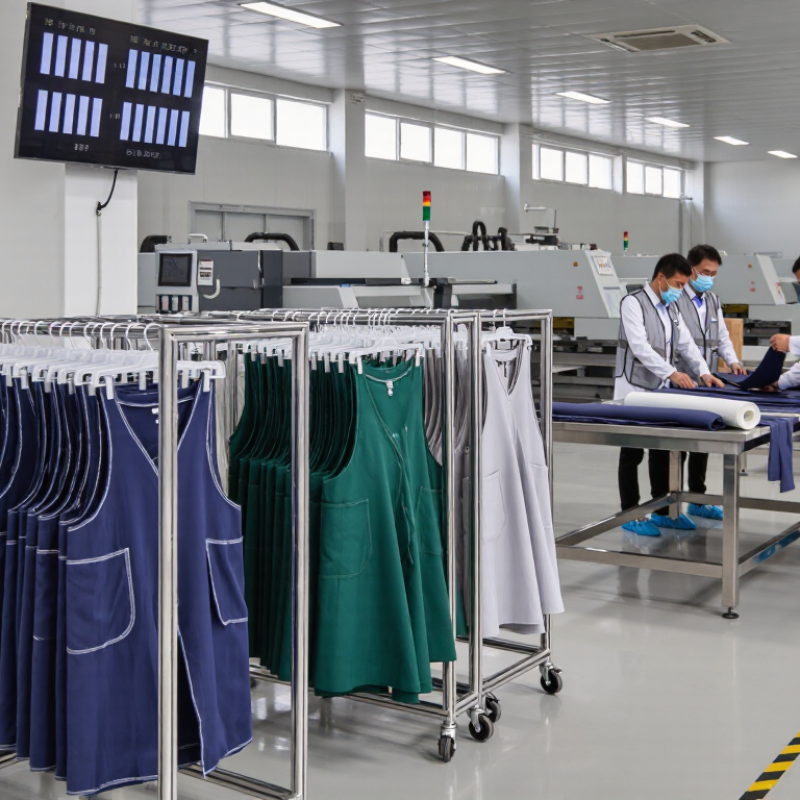
China’s strongest manufacturers often support private labeling, multiple sizes, custom colors, and export packaging. Some also offer protective skirts, thyroid collars, and storage racks. However, no supplier is perfect. Factory photographs can look impressive, yet they cannot replace independent testing or physical sample inspection. Buyers should request recent certificates, production samples, and quality-control procedures before placing large orders. Fit remains an overlooked issue. A heavy apron hanging from one shoulder can create discomfort during long procedures. The best purchasing decision balances protection, ergonomics, durability, compliance, and after-sales support. This guide introduces leading Chinese manufacturers and the practical questions global buyers should ask before choosing a long-term partner.
China Top Lead Apron Manufacturers for Global Buyers

China’s Lead Apron Market: 0.25–0.50 mm Pb-Equivalent Protection

China Top Lead Apron Manufacturers for Global Buyers

China’s lead apron market commonly offers 0.25–0.50 mm Pb-equivalent protection. This range supports different diagnostic imaging environments, from routine radiography to interventional procedures. However, Pb-equivalent does not mean identical protection at every tube voltage. Performance depends on material composition, thickness, overlap, and testing conditions. NCRP Report No. 147 emphasizes reducing occupational exposure through time, distance, shielding, and proper operating procedures. An apron is only one control.

The IAEA’s Safety Reports Series No. 39 recommends using protective clothing that meets relevant performance and quality requirements. Buyers should request independent test reports, stated beam qualities, and measured attenuation results. EN 61331-3 and IEC 61331-3 provide useful references for protective clothing evaluation. Check the label carefully. A 0.50 mm claim may describe front-panel protection only. Sleeves, seams, and side closures can provide different coverage. This detail is often missed.

Tips: Match protection to the procedure, not marketing language. Confirm Pb-equivalent values at the intended energy range. Inspect samples for cracks, stiffness, and uneven weight. Store aprons flat or on approved hangers. Practical experience shows that poor storage can damage shielding layers. Buyers should also review sizing, fasteners, cleaning instructions, and inspection records. A low-cost apron may look efficient, but comfort affects whether staff wear it correctly. The market still needs better transparency.

How IEC 61331-3 Defines Lead Apron Performance for Global Buyers

China Top Lead Apron Manufacturers for Global Buyers

IEC 61331-3 helps global buyers evaluate protective clothing used during medical X-ray procedures. It addresses design, materials, performance, marking, and user information. A lead apron should not be judged by weight alone. Its protective performance depends on declared lead equivalence, coverage, fit, and construction quality.

Look closely at the test documentation. Confirm the stated protection level at relevant X-ray energies. Check whether the report covers the complete apron, not only a material sample. Inspect the front panel, shoulder area, side overlap, seams, and fastening points. These details matter during repeated movement. In real use, an apron that twists or leaves gaps may provide less practical coverage. IEC 61331-3 supports consistent evaluation, but it does not replace careful product inspection. A certificate alone is not enough.

Tips: Ask for the applicable standard edition, test conditions, lead-equivalence data, size chart, and care instructions. Review labels and user information before purchase. Store aprons flat or on suitable wide hangers. Do not fold them sharply. Small cracks may remain invisible, so schedule regular visual and professional checks. Some buyers focus heavily on compliance paperwork and overlook comfort. That is a mistake worth reconsidering. A wearable apron is more likely to be used correctly during long procedures.

China Top Lead Apron Manufacturers for Global Buyers

How IEC 61331-3 Defines Lead Apron Performance

IEC 61331-3 evaluates protective clothing by measuring X-ray attenuation and expressing the result as lead-equivalent thickness in millimetres of lead (mm Pb) under specified radiation qualities. The 0.25, 0.35 and 0.50 mm Pb levels shown are commonly specified protection levels for diagnostic radiology aprons; the actual protection claim must be verified from the manufacturer’s test report for the relevant tube-voltage range and radiation quality.

Comparing Chinese Manufacturers by 0.25, 0.35, and 0.50 mm Pb Ratings

China Top Lead Apron Manufacturers for Global Buyers

When comparing Chinese manufacturers, begin with the stated lead-equivalent rating. A 0.25 mm Pb apron is lighter and easier to wear during short procedures. It may suit lower-scatter environments when a qualified radiation-safety assessment supports that choice. The 0.35 mm rating offers a practical middle ground. Many purchasing teams prefer it for routine fluoroscopy because it balances coverage, flexibility, and weight. A 0.50 mm Pb apron provides stronger attenuation, but it feels heavier across the shoulders and waist. More protection is not automatically better if staff remove it frequently.

Performance depends on tube voltage, exposure geometry, seams, and front-back coverage. Ask manufacturers for independent test reports under IEC 61331-3, not only factory declarations. The report should identify the tested material, thickness, kVp range, and sampling method. NCRP Report 147 emphasizes shielding design, distance, workload, and exposure control rather than apparel alone. The IAEA General Safety Requirements Part 3 sets occupational exposure at 20 mSv annually, averaged over five years. An apron cannot guarantee compliance. Fit testing and inspection still matter.

A useful factory comparison includes weight per size, overlap width, closure durability, and storage guidance. Buyers should also examine how quickly the material cracks after repeated folding. This is often overlooked. I have seen specifications appear impressive, while poor sizing creates gaps near the thyroid or waist. That weakness deserves attention. Chinese suppliers with traceable batch records, consistent lead-equivalence testing, and clear replacement policies offer more reliable purchasing evidence than low prices alone.

China Top Lead Apron Manufacturers for Global Buyers - Comparing Chinese Manufacturers by 0.25, 0.35, and 0.50 mm Pb Ratings
Comparison Dimension 0.25 mm Pb Class 0.35 mm Pb Class 0.50 mm Pb Class Buyer Verification Point
Nominal lead-equivalent rating 0.25 mm Pb 0.35 mm Pb 0.50 mm Pb Confirm the test report states the rating at the applicable X-ray tube voltage and test method. Lead equivalence is not the same as the physical thickness of the garment.
Typical protection position Suitable for lower-scatter or shorter-duration procedures when the risk assessment permits a lighter garment. A balanced option for routine diagnostic radiography, fluoroscopy, and general mobile X-ray work. Designed for higher scatter exposure or longer fluoroscopy sessions where increased attenuation is required. Selection should be based on workload, distance, exposure time, beam orientation, and local radiation-safety rules.
Typical garment weight tendency Lightest of the three ratings for the same pattern and coverage area. Moderate weight; generally offers a practical balance between protection and mobility. Heaviest option for the same coverage area; ergonomic design becomes especially important. Request the finished-product weight for the exact size, overlap, collar, and skirt configuration rather than relying on a catalog estimate.
Common product constructions Single-front apron, vest-style apron, thyroid collar, and lightweight wrap design. Front-overlap apron, vest-and-skirt set, wraparound apron, and maternity-style designs. Front-overlap or wraparound apron, usually with reinforced closures and improved load distribution. Check whether the quoted rating applies to the front only, front overlap, back panel, sleeves, collar, and other included parts.
Material options offered by Chinese suppliers Lead-based protective composite, lead-free metal composite, or other non-lead shielding composite. Lead-based or lead-free composite constructions, depending on the specified attenuation and flexibility requirements. Lead-based or higher-loading composite constructions; non-lead versions may have different weight and flexibility characteristics. Ask for the material safety data sheet, composition statement, and documentation for any lead-free or composite material claim.
Flexibility and drape Usually the easiest rating to handle and fold, subject to the material formulation and panel design. Normally provides a moderate balance of flexibility, coverage, and durability. May feel stiffer or more demanding to wear, particularly in large coverage areas. Request product samples or videos showing bending, hanging, and closure performance before placing a bulk order.
Coverage configurations to compare Front protection, optional back panel, and separate thyroid protection. Front and back coverage, overlapping panels, or two-piece vest-and-skirt systems. Extended front overlap, wraparound coverage, and optional shoulder or thyroid protection. Compare actual coverage dimensions in centimetres, not only generic size labels such as S, M, L, or XL.
Closure and load-distribution features Hook-and-loop fastening, buckles, or simple waist ties are commonly available. Adjustable hook-and-loop closures, elastic sections, cross-back support, or vest-and-skirt separation. Stronger fastening systems, shoulder padding, cross-back support, or two-piece designs are preferable for comfort. Check closure strength, adjustability, stitching, edge binding, and whether the garment can be fitted without excessive shoulder load.
Inspection and quality-control documents Product specification, dimensional inspection, visual inspection, and Pb-equivalence test documentation. Product specification, batch or lot inspection, dimensional inspection, visual inspection, and Pb-equivalence test documentation. Product specification, batch testing, dimensional inspection, visual inspection, and Pb-equivalence test documentation are strongly recommended. Request a sample test report linked to the production batch, not only a general marketing certificate.
Relevant standards to discuss IEC 61331-3 or the destination market’s equivalent requirements for protective clothing. IEC 61331-3 or the destination market’s equivalent requirements, with the test conditions clearly identified. IEC 61331-3 or the destination market’s equivalent requirements, with particular attention to coverage and uniformity. Confirm which edition and test conditions apply. Local regulations may require additional conformity, labeling, or importer documentation.
Best-fit buyer priority Lower garment weight, basic routine protection, and easier staff movement. Balanced protection, comfort, durability, and broad clinical usability. Higher nominal attenuation, extended coverage, and use in higher-scatter or longer-duration environments. Do not choose a rating by price alone; evaluate protection, ergonomics, garment life, storage, and inspection procedures together.
Storage and service-life considerations Store flat or on a broad hanger; avoid folding, creasing, heat, and unnecessary compression. Use a dedicated apron rack or broad hanger and inspect regularly for cracks, creases, and closure damage. Use reinforced storage support because the higher weight can increase stress on seams, closures, and hanging points. Follow the supplier’s inspection instructions and remove any garment showing visible cracks or suspected shielding damage from service.
Recommended sourcing questions What is the exact Pb-equivalence test condition, finished weight, coverage area, and material composition? Can the supplier provide batch traceability, sample approval, size grading, and packaging specifications? How is the additional weight managed, and can the supplier provide uniformity, seam, and coverage verification? Include rating, test condition, dimensions, tolerances, materials, labeling, packaging, inspection, and acceptance criteria in the purchase specification.
Technical note: The 0.25, 0.35, and 0.50 mm Pb values are nominal lead-equivalent categories commonly used in buyer specifications. Actual attenuation depends on the material, energy range, construction, coverage, and test method. Obtain and review product-specific test documentation before purchase.

Factory Audits: ISO 13485, Batch Testing, and Traceability Requirements

China Top Lead Apron Manufacturers for Global Buyers

Factory audits should examine evidence, not polished presentations. ISO 13485 confirms a medical-device quality system, but it does not automatically prove apron performance. The ISO Survey 2023 shows ISO 13485 remains widely adopted across regulated medical manufacturing. Buyers should verify the certificate’s scope, issuing body, expiry date, and production address. One overlooked detail matters: Does the certified system cover protective garments?

Ask for batch records, not general promises. Each production lot should show material thickness, lead-equivalence results, test voltage, sampling method, and inspector approval. The IAEA Safety Standards recommend documented quality assurance, acceptance testing, and periodic performance checks for radiation-protection equipment. Manufacturers should also inspect stitching, fasteners, collars, and folded sections. Small cracks can hide beneath a clean outer surface.

Traceability must work backward and forward. A reliable factory can connect one apron to its raw-material lot, operator, test report, packing record, and shipment date. Labels should remain readable after repeated cleaning. UNSCEAR’s 2020/2021 Report identifies medical exposure as the dominant man-made source of public radiation exposure, making practical quality controls important. Yet audits are never perfect. A strong factory may still miss a damaged seam during sampling. Buyers should request independent retesting, especially after design changes or supplier substitutions. The checklist is useful, but physical inspection remains decisive.

Export Evaluation: MOQ, EN 61331 Compliance, and 5–10-Year Service Life

China Top Lead Apron Manufacturers for Global Buyers

Export buyers should treat MOQ as a risk variable, not merely a price threshold. A supplier offering 20 pieces may support pilot orders and easier quality checks. Larger MOQs can reduce unit cost but increase storage pressure. Ask whether the MOQ applies per size, color, or complete shipment. Confirm lead time, replacement policy, and packaging before paying a deposit. Small details often create large delays.

EN 61331 compliance requires documented evidence, not broad marketing language. Request current test reports from a competent laboratory. Check the tested material, protective equivalence, product design, and report scope. The report should match the apron supplied. Review labels, batch records, seam quality, and overlap around the front and sides. A pre-shipment inspection can identify cracks, thin areas, or uneven stitching. It is not perfect, but it reduces avoidable surprises.

A five-to-ten-year service life is possible under controlled use, storage, and inspection. It is not an automatic promise. Frequent folding, heat, chemicals, and rough handling may shorten performance. Buyers should establish an inspection schedule and record each apron’s purchase date. Store garments flat or on wide supports. Replace any item showing cracks, creases, exposed material, or damaged fasteners. In my experience, suppliers sometimes overstate durability. That deserves careful questioning. Request written care instructions, warranty terms, and evidence from comparable export orders before selecting a factory.

Search engine powered by ElasticSuite