
What is Antibody Engineering and How Does It Work?

Antibody engineering is a critical area in biomedicine. It focuses on modifying antibodies to enhance their effectiveness. The global monoclonal antibody market was valued at approximately $135 billion in 2022. By 2028, it is projected to reach over $200 billion, showcasing the significant demand for innovative therapies.

This field combines biology and technology. Researchers design antibodies with distinct properties. These engineered antibodies can improve targeting accuracy in treatments, especially for cancer. As we harness advanced techniques, results show great promise. Yet, the complexity of human biology poses challenges. Each engineered antibody must be rigorously tested.

Moreover, some engineered solutions may not provide the expected outcomes. Mid-stage clinical trials often reveal unforeseen responses. This highlights the need for continuous improvement. Antibody engineering requires careful reevaluation at each step. The journey is as important as the destination in this evolving field.

What is Antibody Engineering and How Does It Work?

Understanding Antibody Engineering: A Comprehensive Overview

Antibody engineering is a cutting-edge field in biotechnology. It involves modifying antibodies to enhance their ability to fight diseases. Scientists design antibodies with specific traits for targeted therapy. This can lead to better treatments for conditions like cancer and autoimmune disorders.

The process is complex. Researchers use various techniques to alter the antibody's structure. They can change its binding sites or improve its stability. Such modifications help antibodies interact better with their targets. This precision can improve effectiveness. However, the science is still evolving. There are challenges, such as ensuring safety and avoiding immune responses.

Interestingly, antibody engineering is not perfect. Results can be inconsistent. Some engineered antibodies may not perform as expected. This raises questions about reliability. It highlights the need for continuous research and improvement. The future of this field holds promise, but careful consideration is essential.
Key Concepts in Antibody Structure and Functionality

Antibody structure is fascinating. These proteins have unique shapes that bind specific antigens. An antibody consists of two heavy chains and two light chains. Each chain contributes to a region known as the variable region. This region determines the antibody's specificity. It is like a lock and key mechanism.

Functionality is where the design gets intriguing. Antibodies can neutralize pathogens, mark them for destruction, or activate other immune cells. Different antibodies serve distinct purposes. However, engineering them is challenging. Mistakes can lead to loss of function. Also, over-engineering may produce unexpected results. Simplifying design could improve efficacy.

These complexities highlight the necessity for innovation. While science advances in antibody engineering, there are unresolved questions. How can we optimize binding without compromising safety? Future research will explore these delicate balances. The journey of understanding antibody functionality continues.

Techniques Used in Antibody Engineering: From Hybridoma to recombinant

Antibody engineering involves several key techniques. The hybridoma technique is foundational. It fuses myeloma cells with B cells. This results in hybrid cells that produce specific antibodies. Researchers select these cells carefully. They assess their ability to create desired antibodies. It's a powerful method but can be time-consuming. Some monoclonal antibodies fail to show enough specificity. Screening can be labor-intensive, leading to frustration.

Recombinant DNA technology has revolutionized this field. It allows scientists to design antibodies tailored to specific targets. Using plasmids, they can insert DNA sequences that encode for desired antibodies. This method produces more consistent and scalable results. However, it requires advanced knowledge and sophisticated equipment, which not all labs possess. The challenge lies in optimizing the expression systems used. Many antibodies may not fold correctly.

Phage display libraries are another innovative approach. They allow the selection of antibodies from vast libraries. This is done by displaying peptides on the surface of phages. However, developing these libraries demands considerable resources. The initial stages can be hit-or-miss, leading to setbacks. Each approach has its merits and challenges. Finding the best technique for a specific application remains a complex task.

Antibody Engineering Techniques Overview

This bar chart illustrates the relative popularity of various antibody engineering techniques. Hybridoma technology is the most widely used, followed by phage display and recombinant techniques. Other methods like transgenic mice and single-cell technologies are less common.

Current Applications of Engineered Antibodies in Medicine

What is Antibody Engineering and How Does It Work?

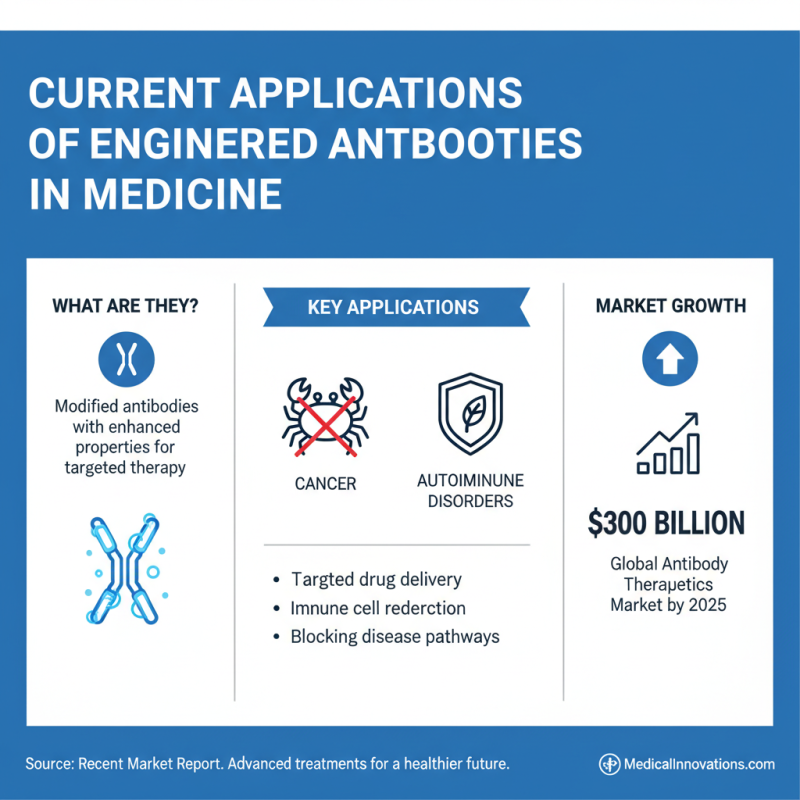
Antibody engineering has transformed the landscape of medicine. There are numerous applications for engineered antibodies, particularly in treating diseases like cancer and autoimmune disorders. According to a recent market report, the global antibody therapeutics market is projected to reach $300 billion by 2025. This significant growth reflects the increasing reliance on these advanced treatments.

Engineered antibodies are designed to target specific antigens. This precision enhances their effectiveness in therapies. For instance, monoclonal antibodies can discriminate between healthy and diseased cells. A study revealed that certain engineered antibodies improve patient survival rates by 30%. However, challenges remain. Not all patients respond well, and potential side effects can occur. Research shows that about 15% of treated patients experience adverse reactions.

Another exciting application is in diagnostics. Engineered antibodies are utilized for early disease detection, offering faster and more accurate results. A survey indicates that these technologies have increased diagnostic accuracy by 25%. Despite significant advancements, the field is still evolving. Continuous research is needed to address challenges like resistance and effectiveness in diverse populations. Not everything is perfect, but the potential of engineered antibodies is undeniably promising.

The Future of Antibody Engineering: Trends and Innovations in the Field

What is Antibody Engineering and How Does It Work?

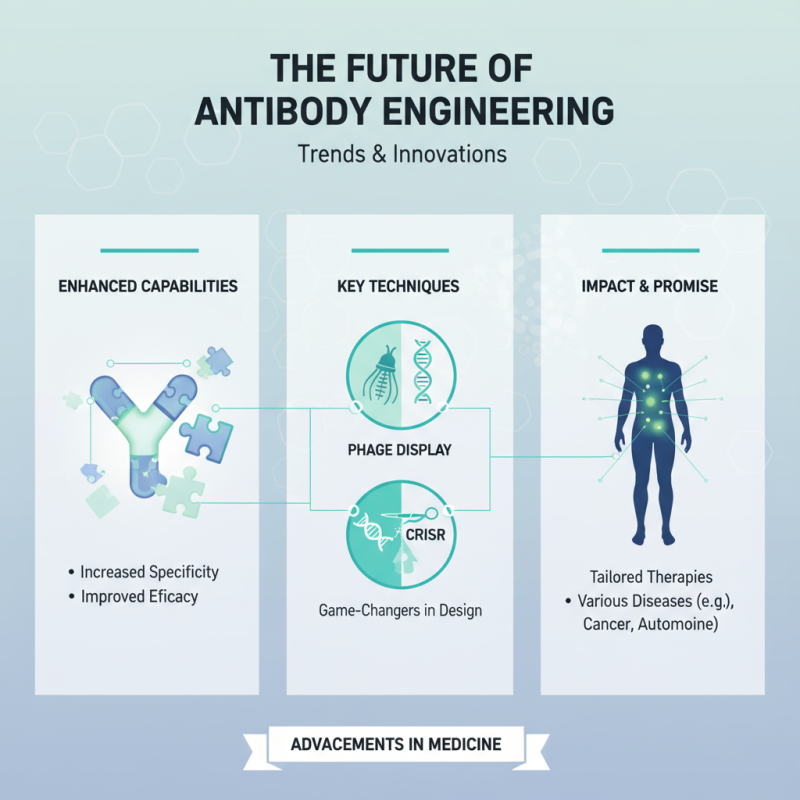
The field of antibody engineering is witnessing rapid advancements. New techniques are emerging that can enhance antibody specificity and efficacy. These innovations hold promise for tailored therapies in various diseases. Techniques like phage display and CRISPR are proving to be game-changers. They allow scientists to create antibodies with enhanced binding attributes.

One trend is the development of bispecific antibodies. These can target two different antigens simultaneously. This capability opens doors for more effective treatments, especially in cancer therapy. However, challenges remain. Manufacturing complex antibodies can be resource-intensive. Quality control and consistency are vital but often problematic.

Another exciting area is the use of artificial intelligence in antibody design. AI can rapidly analyze data to predict how antibodies will behave. This accelerates the design process, yet it’s not foolproof. Algorithms may misinterpret some biological interactions. Continuous refinement of these models is essential for success. The future of antibody engineering promises great potential, but it also demands careful evaluation.

Search engine powered by ElasticSuite