
Selecting the right primary antibody is crucial for successful research outcomes. The choice can significantly impact the results of an experiment. Antibodies are essential tools in various applications, from Western blotting to immunohistochemistry.
Understanding the specific requirements of your experiment is vital. Different primary antibodies are tailored for specific targets and applications. For instance, some antibodies work best under certain conditions, such as temperature or incubation time. Additionally, validation of the primary antibody is necessary for reliable results. This ensures that the antibody binds specifically to its target.
Researchers often face challenges in this selection process. Not all antibodies yield consistent results across different samples. Some may perform well in one experiment but fail in another. Consulting product datasheets and scientific literature can provide helpful insights. Engaging with experienced colleagues or experts in the field can also offer valuable guidance. In the end, taking time to choose the right primary antibody can save significant hassle later in your research journey.

In research, primary antibodies play a crucial role. They are essential for specific binding to target proteins. This specificity is vital for accuracy in experimental results. Data from industry reports highlights that over 70% of researchers consider primary antibodies their most critical reagent. Their selection directly influences the sensitivity and reliability of assays.
The importance of selecting the right primary antibody cannot be overstated. A study indicated that nearly 30% of experiments fail due to improper antibody selection. This misstep often leads to misleading results and wasted resources. Researchers must critically assess factors such as specificity, affinity, and cross-reactivity. These aspects determine how well the antibody will perform in various applications.
Many researchers may overlook the need for validation. It's not enough to simply choose a well-reviewed antibody. New findings often emerge about existing products. Therefore, regularly reviewing literature is essential. This practice can help avoid using antibodies that are outdated or lack adequate characterization. Engaging with the scientific community can also enhance understanding of the true capabilities of these tools in research.
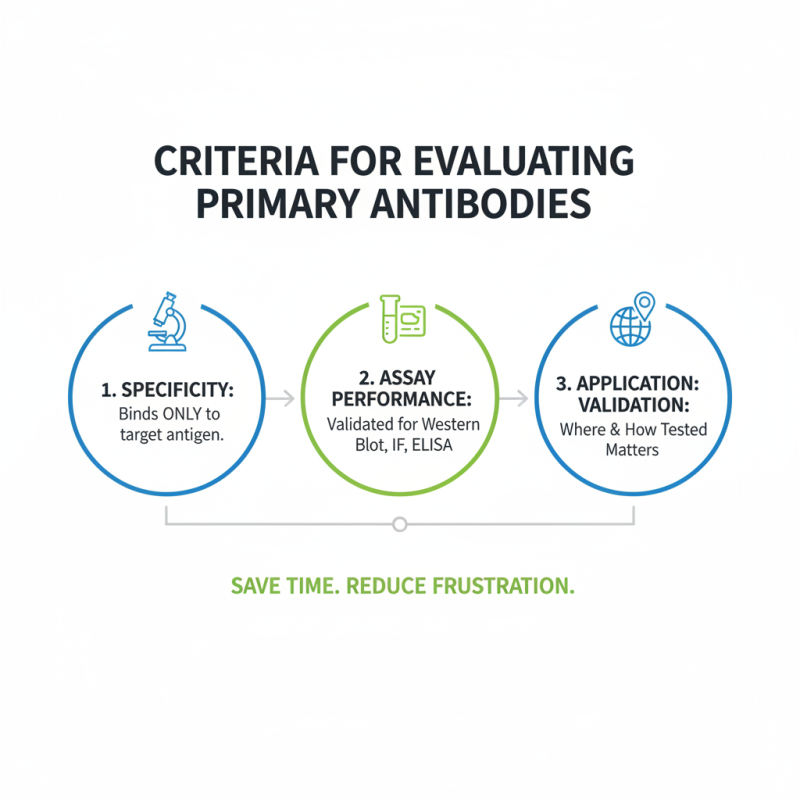
When choosing primary antibodies, several key criteria must be considered. First, specificity is paramount. The chosen antibody should bind only to the target antigen without cross-reactivity. Assessing the antibody's performance in specific assays is crucial. Not all antibodies perform equally in Western blots, immunofluorescence, or ELISA. Understanding where and how the antibody has been validated matters. This can save time and reduce frustration later.
Another factor is the host species. Antibodies produced in different species can exhibit variations in binding and performance. Choosing the correct host can enhance sensitivity and overall results. The clonality of the antibody—whether it is polyclonal or monoclonal—also plays a role. Monoclonal antibodies tend to provide more consistent results. However, polyclonal antibodies may offer a broader detection range, particularly in complex samples.
It's advisable to review the data sheets thoroughly. Look for information on reactivity, dilution factors, and recommended protocols. Often, the detailed instructions can reveal nuances about the antibody's expected performance in your specific context. Sometimes, unexpected issues arise when protocols are not followed precisely. Understanding these details fosters greater success in your experiments and enhances reproducibility.
Selecting the right primary antibody is crucial for successful experiments. Species reactivity plays a significant role in this process. Antibodies are specific to their target antigens, usually derived from particular species. Selecting an antibody that reacts with your sample's species is essential for accurate results.
When choosing primary antibodies, consider the source of the antigen. For example, if your target protein is from a mouse, a rabbit monoclonal antibody may be a better fit. The reactivity ensures that the antibody binds effectively to your antigen, minimizing background noise in your results. It helps to research various antibodies and their performance in specific species.
Tips to remember: Always validate your choices against existing literature. Ensure that the primary antibody is well characterized in your specific species. Sometimes, cross-reactivity can occur, leading to unexpected results. It’s wise to run pilot experiments to test the antibody’s effectiveness. If results vary, consider adjusting the experimental conditions or trying a different antibody altogether.
When selecting a primary antibody, assessing its quality and validation is crucial. Start by checking the manufacturer’s specifications. A reputable supplier will provide data on specificity, sensitivity, and reactivity. Look for details from peer-reviewed publications or independent studies. This information can offer insights into an antibody's reliability.
Validation methods such as western blotting or immunohistochemistry are essential. These techniques demonstrate the antibody's performance in real experiments. Reading experimental protocols in published references can help gauge reliability. Remember, antibody performance may vary between different lots. Each batch can exhibit slight variations, which might impact your results.
It's vital to remain critical of experimental data. Not all antibodies labeled as "validated" live up to the claim. It's wise to consult others in your field to share experiences. Trial and error may be necessary until you find an antibody that consistently meets your needs. Engaging with community discussions can uncover insights not mentioned in product descriptions.
When selecting antibodies, practical considerations are crucial. Understanding storage conditions is often overlooked. Antibodies typically require refrigeration. Some need to be stored at -20°C or -80°C. Improper storage can lead to degraded samples. This degradation may compromise the results of your experiments.
It's vital to keep track of expiration dates and handling practices. Always record when the antibody was thawed or opened. This helps maintain reliability. Consider how often you will use the antibody. Frequent freeze-thaw cycles can diminish its effectiveness.
Document storage conditions and protocols. This provides transparency in your work. If an antibody is failing, look back at your storage procedures. Learning from past experiences can improve your future work. These small steps can make a big difference in your research outcomes.